
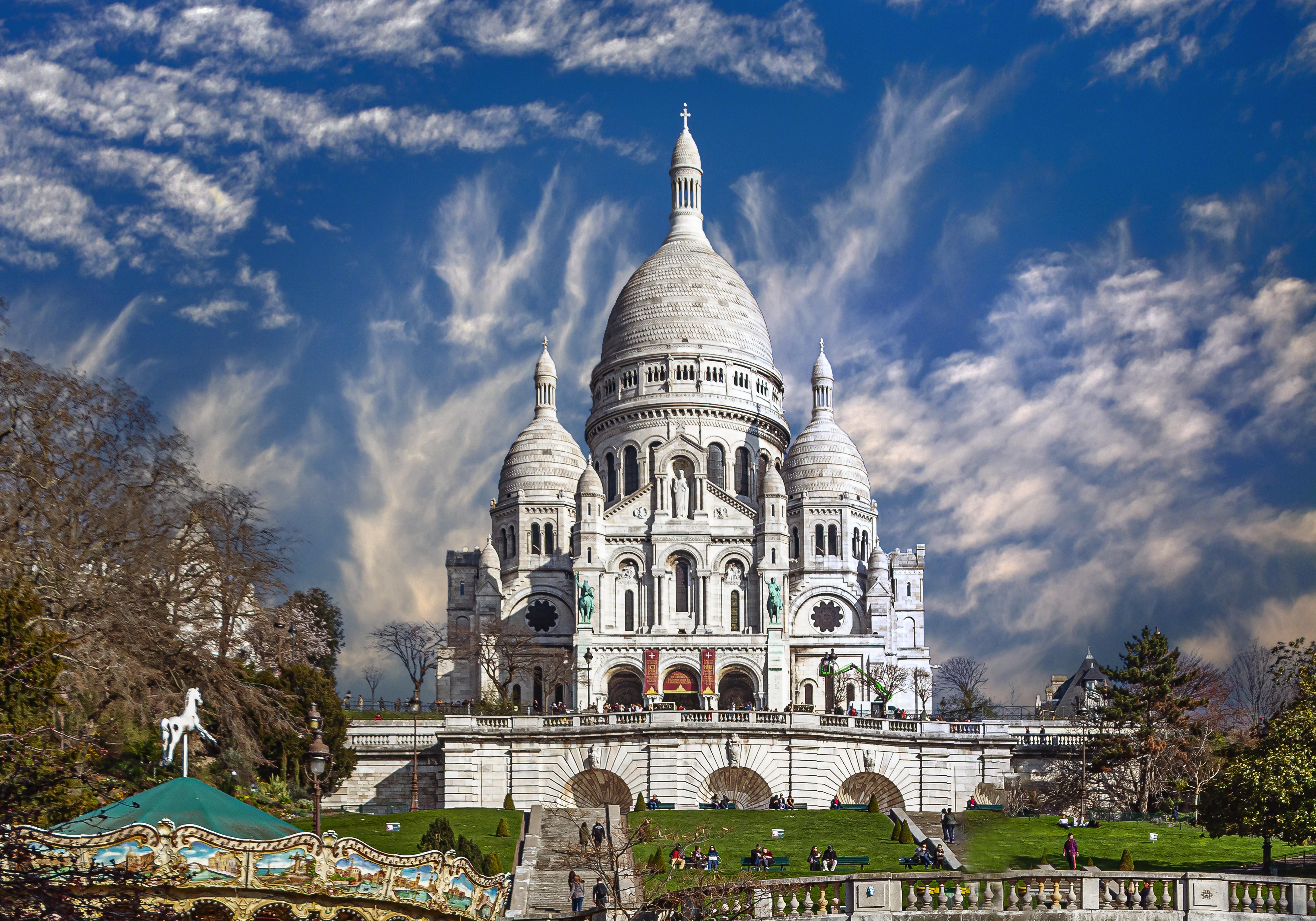
To many, Montmartre is a postcard: the white domes of the Sacré-Cœur, the caricaturists at Place du Tertre, and the neon glow of the Moulin Rouge. But for those who live and guide on the hill, the real Montmartre is a place of quiet vines, hidden ateliers, and streets that have remained remarkably unchanged since the Impressionists first set up their easels here.
Montmartre was not officially part of Paris until 1860, and it has never quite lost its village character. It is a place that requires a subtle eye and an expert navigator to reveal the silence behind the souvenirs.
In this guide, we bypass the obvious to uncover the secrets of the *Butte*, exploring the corners where modern art was born and where the bohemian pulse of Paris still beats.
What Most Visitors Miss in Montmartre
The hill is a victim of its own beauty. Thousands of travelers ascend the funicular every day, take three photos of the basilica, and descend again without ever seeing the *rue Girardon* or the quiet square where Saint-Denis allegedly picked up his head.
Coming to Montmartre with a state-licensed local guide is not about avoiding the landmarks; it is about seeing them in context. It is the ability to turn a corner and find yourself in a 19th-century village, far removed from the digital noise of the 21st century.
The Hidden Vineyard of Montmartre
Perhaps the neighborhood's best-kept secret is the Clos Montmartre. Tucked away on the northern slope of the hill, this functioning vineyard produces approximately 1,500 bottles of wine per year.
Established in 1933 to protect the land from urban development, the vineyard remains a symbol of Montmartre's defiance. Every October, the *Fête des Vendanges* (Harvest Festival) celebrates the new vintage with a parade and fireworks—a moment when the neighborhood reclaimed its rural identity. Even in April, the sight of the vines beginning to bud against the Parisian stone is a profound reminder of the hill's history.
The Bateau-Lavoir — Where Modern Art Was Born
In the early 1900s, a ramshackle building at 13 Place Émile-Goudeau became the epicenter of the art world. This was the Bateau-Lavoir. In its drafty corridors, Pablo Picasso painted Les Demoiselles d'Avignon, effectively inventing Cubism and changing the course of art history forever.
Modigliani, Braque, and Apollinaire all lived or worked here, sharing bread and ideas in what was then a slum for penniless artists. While much of the original timber structure was destroyed by fire in 1970, the site remains a pilgrimage point. Standing before the storefront display that honors its legacy, your guide can paint a picture of the poverty and passion that birthed modernism.
The Streets That Haven't Changed
To walk the **rue Lepic** or the **rue des Abbesses** is to trace the footsteps of Van Gogh. These streets still hold the rhythm of a market village. But the true spirit of Montmartre is found in the stairs—the steep, white-stone staircases immortalized in the film *Amélie*.
- Place du Tertre: While crowded, the square still holds the pulse of the community if you arrive before 9 AM.
- Avenue Junot: An aristocratic enclave featuring Art Deco villas and a profound silence that contrasts sharply with the nearby souvenir shops.
- Villa Léandre: A cul-de-sac of English-style houses that feels entirely disconnected from the French capital.
The Sacré-Cœur — Beyond the Obvious
The **Basilica of the Sacré-Cœur** is an architectural marvel of travertine stone that actually bleaches itself white with every rainstorm. But its history is controversial. Built as a penance after the Franco-Prussian War and the bloody Paris Commune, it was originally viewed with suspicion by many locals.
The view from the parvis is legendary, but the view from the dome (the highest point in Paris after the Eiffel Tower) is transcendent. Our guides recommend a sunrise visit to appreciate the basilica in the first light of spring, before the crowds arrive and the atmosphere shifts.
Montmartre's Cemetery — The Forgotten Stars
Beneath the steel lattice of the Caulaincourt Bridge lies the **Cimetière de Montmartre**. It is the most atmospheric corner of the neighborhood, a place where the graves of Degas, Stendhal, and the legendary singer Dalida sit in a romantic tangle of ivy and stone. It is a quiet sanctuary for those who wish to pay respects to the artists who made the hill famous.
Where to Eat and Drink in Montmartre
Avoiding tourist traps in Montmartre is an art form. We recommend starting your morning near **Place des Abbesses**, where the boulangeries still serve the locals before the tourists arrive.
- Le Consulat: Once a haunt for Picasso and Sisley, it is best enjoyed for an early morning espresso on the terrace.
- The Cave near the Vineyard: Seek out the small wine shops on the north side for a taste of local vintages.
- Rue des Abbesses: Home to some of the best artisanal cheesemongers and wine merchants in the city.
How to Get to Montmartre
The most atmospheric approach is via the **Line 12 Metro to Abbesses**—one of the deepest metro stations in Paris with a classic Art Nouveau entrance. For a less strenuous ascent, take the funicular from **Anvers**.
For those who enjoy a walk, we recommend starting at **Pigalle** and winding your way up through the quiet streets rather than taking the direct tourist path up the stairs. The best time to arrive is 8:30 AM, allowing you to see the hill as it wakes up.
Discover Montmartre With an Expert Guide
The hill of artists has a thousand secrets. Join a state-licensed historian for a private or semi-private exploration that goes beyond the sacre-coeur to the heart of bohemian Paris.
Frequently Asked Questions
What is Montmartre known for?
Montmartre is legendary for its artistic heritage (Picasso, Van Gogh, Renoir), the Basilica of the Sacré-Cœur, its historic vineyard, and its bohemian 'village' atmosphere that sets it apart from the rest of Paris.
Is Montmartre safe to visit?
Yes, Montmartre is generally safe for visitors. Like any major tourist destination, exercise normal precautions against pickpockets, especially in crowded areas like Place du Tertre and the stairs leading to the Sacré-Cœur.
How long should I spend in Montmartre?
A thorough exploration of the neighborhood's hidden corners takes about 3 to 4 hours. If you plan to visit the museums and stop for a proper Parisian breakfast, allow for a full morning or afternoon.
What is the best way to see Montmartre?
The best way to see Montmartre is on foot with a licensed local guide. The neighborhood's secrets are hidden in its steep, winding lanes and private courtyards that are easy to miss without expert navigation.
Is there a vineyard in Montmartre?
Yes, the Clos Montmartre is a functioning vineyard located on the north side of the hill. It is the last active vineyard within the city limits of Paris, producing around 1,500 bottles of wine annually.
Experience the soul of the Butte with Scenic Zephyr Guides.
Explore the Collection